Does a marketer need a mentor? 6 situations where one saves you years

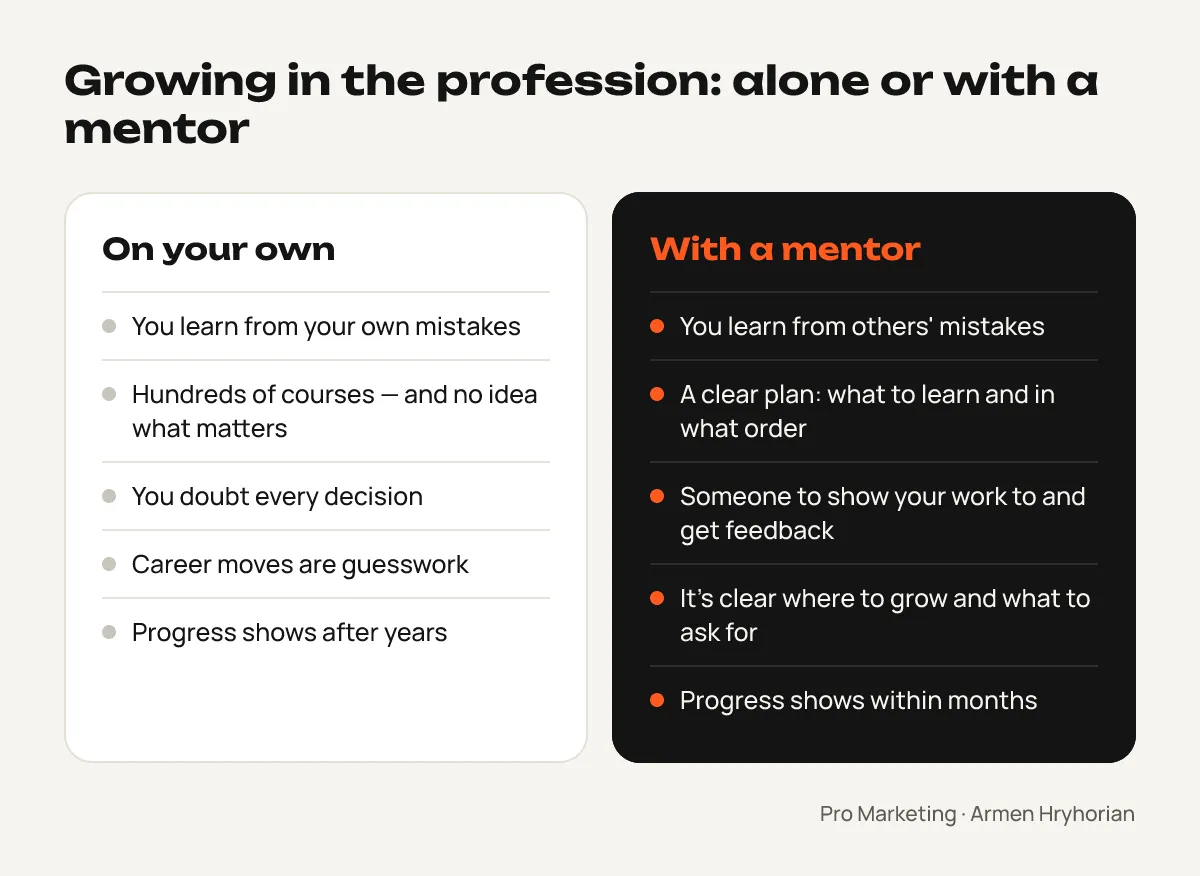
You can get into marketing on your own: there are more free materials than you’ll ever have time to read. But that’s exactly why so many people go round in circles for years — learning the wrong things, in the wrong order, without knowing whether they’re moving forward at all.
A mentor doesn’t replace learning or work. A mentor shortens the path: shows you what not to waste time on and helps you see your tasks through the eyes of an experienced professional.
6 situations where a mentor helps the most
1. You’re just starting and drowning in information
Courses, bootcamps, YouTube, Telegram channels — and each one says its topic is the most important. A mentor helps you make a plan: what to learn now, what later, and what you can skip entirely.
2. You’re already working but feel stuck
For a year or two you’ve been doing the same tasks, your salary isn’t growing, and it’s unclear where to go next. This is where you need an outside view: which skills to improve to reach the next level, and how to show that to your manager.
3. You’ve been given a task you’ve never done before
Your first ad campaign launch, your first strategy, your first report for a business owner. You can spend a week figuring it out — or an hour discussing it with someone who has done it dozens of times.
4. You’re preparing for interviews
CV, portfolio, test assignments, salary questions. A mentor knows what managers look for and will help you present your experience so it gets the credit it deserves.
5. You’re switching direction within marketing
Moving from SMM to performance, from an agency to a product company, from doing the work to leading a team. Every switch like this has its traps, and it’s better to know them in advance.
6. You lack feedback
If there’s no stronger marketer around, no one checks your decisions. Mistakes repeat and confidence drops. Regular feedback is the fastest way to grow.
When you don’t need a mentor
Honestly — not always. If you have a strong manager who gives you regular feedback, or you haven’t yet decided whether you want to be a marketer at all, start with basic training and practice.
A mentor is most useful when you already have tasks and questions. Then every session delivers a concrete result.
How to choose a mentor
- A practitioner, not just a teacher. They should do what they teach.
- One or two levels above you. They don’t need to be “the best in the world” — what matters is that they’ve walked the path that’s still ahead of you.
- A clear format. How often you meet, whether you can message between sessions, what the result will be.
- Chemistry. You should feel comfortable asking “stupid” questions.
If you recognised yourself in one of these situations, see how mentoring for marketers works.